Applying Asymmetric Warfare Tactics in Business

Applying Asymmetric Warfare Tactics in Business

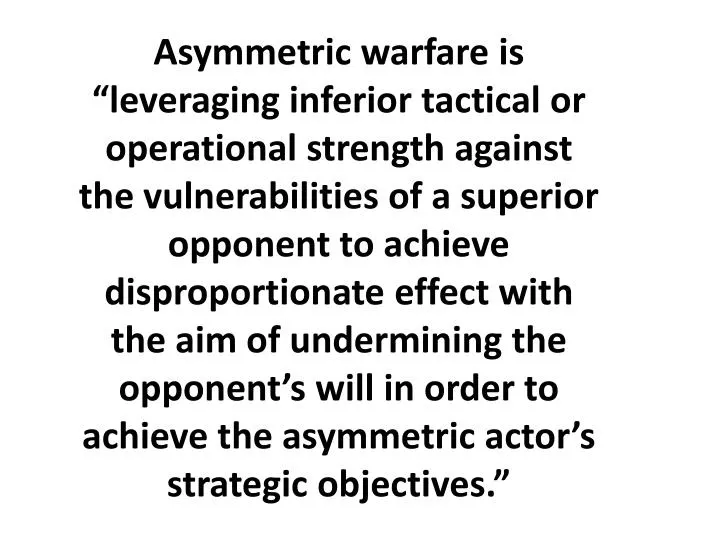
Asymmetric warfare, also known as guerilla warfare, is a war between a professional army and a numerically smaller, lesser-armed movement. While the former mostly sticks to conventional methods of warfare, the latter uses unconventional or asymmetric warfare tactics to gain an advantage over the enemy. Interestingly, the principles of asymmetric warfare are applicable as much in business as they are on the battlefield. Asymmetric Warfare in Business Business and war have more in common than many people think. Your competitors are ruthless, you have to fight hard to gain market share, and fight even harder to retain and increase it. The military principle

Read More
The Map is Not The Territory – Explained in Simple Terms

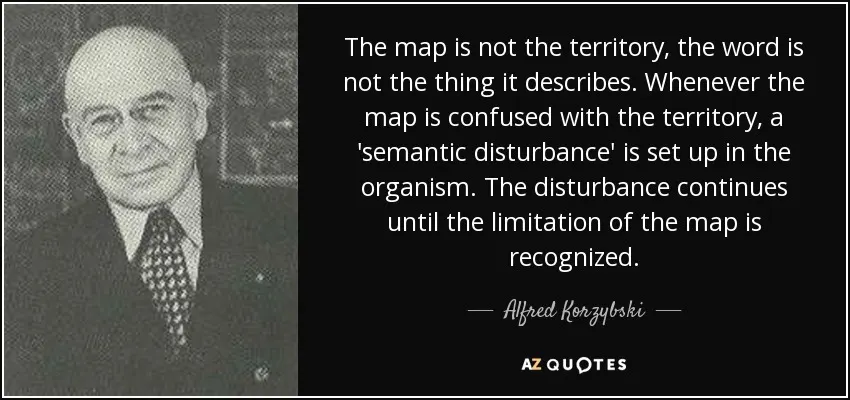
The Map is Not The Territory – Explained in Simple Terms

The map is not the territory is a concept developed by noted mathematician Alfred Korzybski. Korzybski developed the concept to explain the fact that belief is different from reality. In other words, our perception of the world could be different from the real world. While it might sound too obvious, a surprisingly large number of people tend to confuse their beliefs with reality. The Concept and What It Means Human beings have the tendency to simplify things and constitute abstractions in an effort to better understand the world that they live in. We create descriptions of the things around us, which are absolutely necessary, but it is also important to remember

Read More

Single and Double Loop Learning – How Organizations React to Problems and Why It Matters

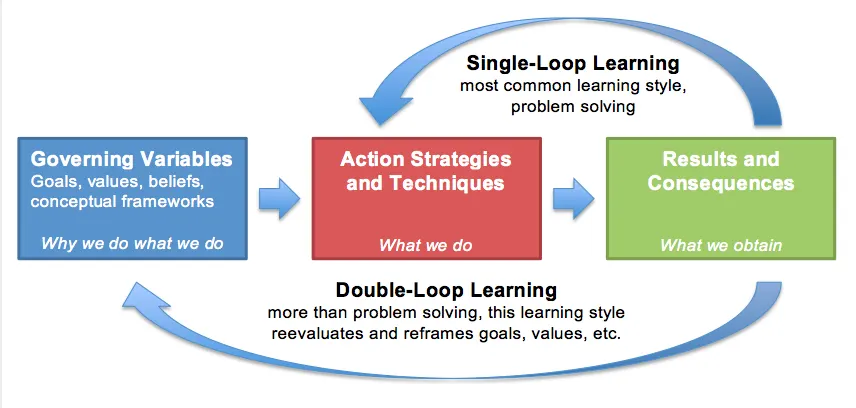
Single and Double Loop Learning – How Organizations React to Problems and Why It Matters

It is said that change is the only constant in life. The principle applies not just to individuals, but large organizations as well. Any large organization ought to be able to unlearn outdated things, learn new things, change its assumptions and projections from time to time based on data, and constantly adapt to an ever-changing environment. This is where the single and double loop learning concepts enter the picture. Single and Double Loop Learning The concept of single and double loop learning was developed by the duo of Chris Argyris, who was a psychologist, and Donald Schon, who was a philosopher. The concept deals with organizational learning

Read More

Long Tail – The Paradigm Shift in the 21st Century Marketplace

Long Tail – The Paradigm Shift in the 21st Century Marketplace

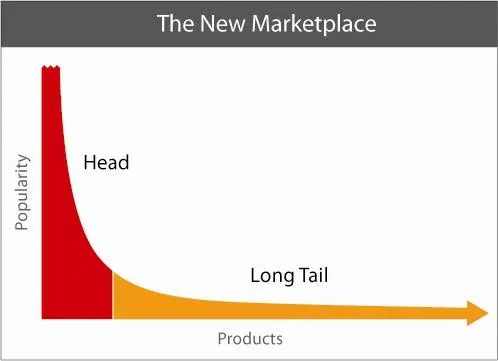
The long tail is a business model which involves offering a large number of niche products that are low in demand and have a low sales volume. This is in stark contrast from traditional business models, which focus more on a small number of best selling products with a large market share. The term was coined and popularized by Chris Anderson, who made an argument for long tail based business models and marketing strategies in his book ‘The Long Tail: Why the Future of Business is Selling More for Less’. In his book, Anderson says that we are witnessing the transition from a marketplace that focuses on best selling products to one that focuses on a million

Read More

Fat Tail Distributions – What Are They and Why Do They Matter?

Fat Tail Distributions – What Are They and Why Do They Matter?

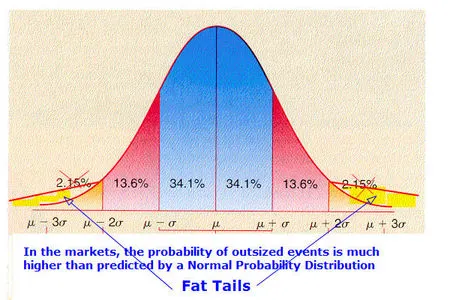
The financial crisis of 2008 (Alan Greenspan knows all about that just like Barney Frank knows about the real estate crisis) was an eye-opener for many people in the industry, as it highlighted the ineffectiveness of conventional financial wisdom when it comes to predicting catastrophic events. It also highlighted the importance and relevance of fat tail distributions in finance. What is a Fat Tail? A fat tail is a statistical distribution that indicates a high probability of rare and extreme outcomes. Under a normal Gaussian distribution, 99% of the outcomes generally fall within three deviations of the mean. Under a fat tail distribution, on the other hand,

Read More

What is Anti-fragility?

What is Anti-fragility?

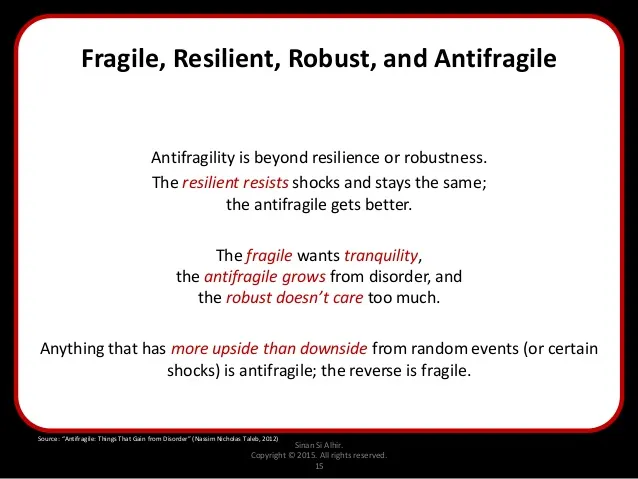
If you think the Black Swan by Nassim Taleb was complex, try interpreting Taleb’s equally important masterpiece, titled ‘Antifragile: Things That Gain From Disorder’. Nassim Nicholas Taleb created a flutter in the intellectual world with his seminal work Black Swan. The book makes you think and question the values and suppositions by which you live your life. However, Taleb’s Antifragile makes you introspect even more. Chances are that your mind will be overwhelmed with a triad of: FRAGILE – ROBUST – ANTIFRAGILE. Each of these represents a concept or a categorization developed by Taleb. None of them hold relevance in classroom curriculums

Read More

Dunbar’s Number and Its Relevance in Daily Life

Dunbar’s Number and Its Relevance in Daily Life

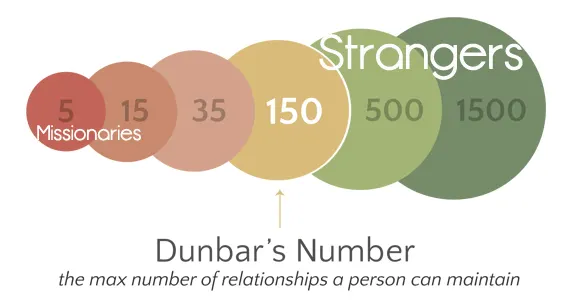
What is the number of close friends and acquaintances you have in your social circle? For some people, it might be a count-on-one-hand list, for some others, it might be a large number. The average human being, according to experts, is capable of maintaining stable, social relationships with 150 people, which is known as Dunbar’s Number. What Is It? Dunbar’s Number is a concept developed by British anthropologist Robin Dunbar. It is the number of social relationships that the average person is capable of developing and maintaining throughout their life. Dunbar developed this theory while studying the relationship between the brain size of primates

Read More

The Red Queen Effect

The Red Queen Effect

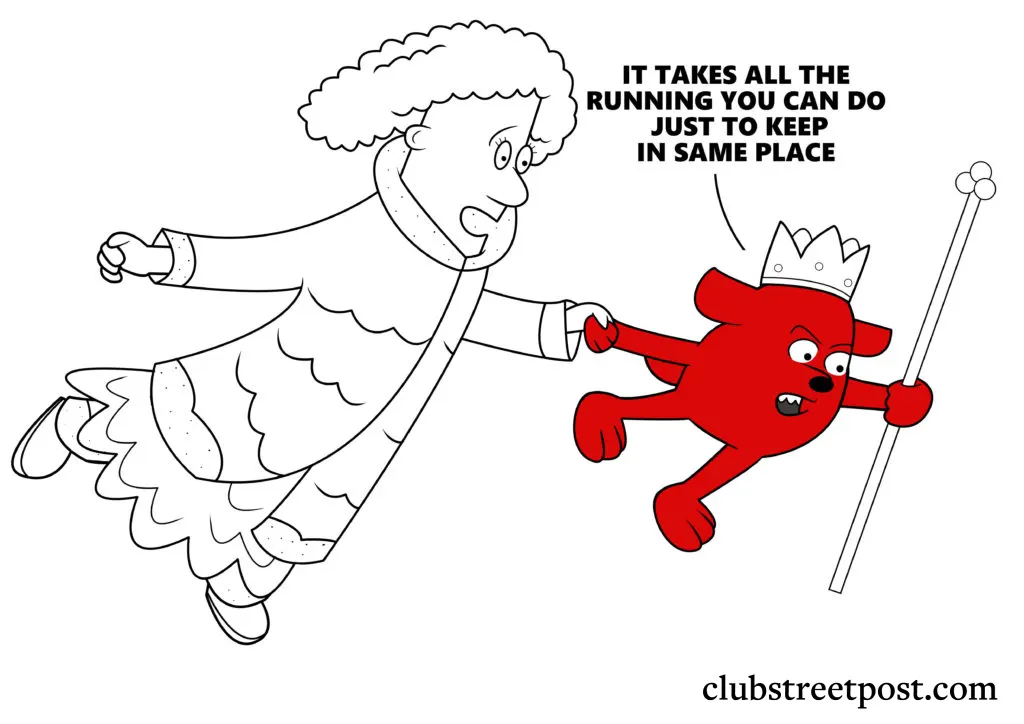
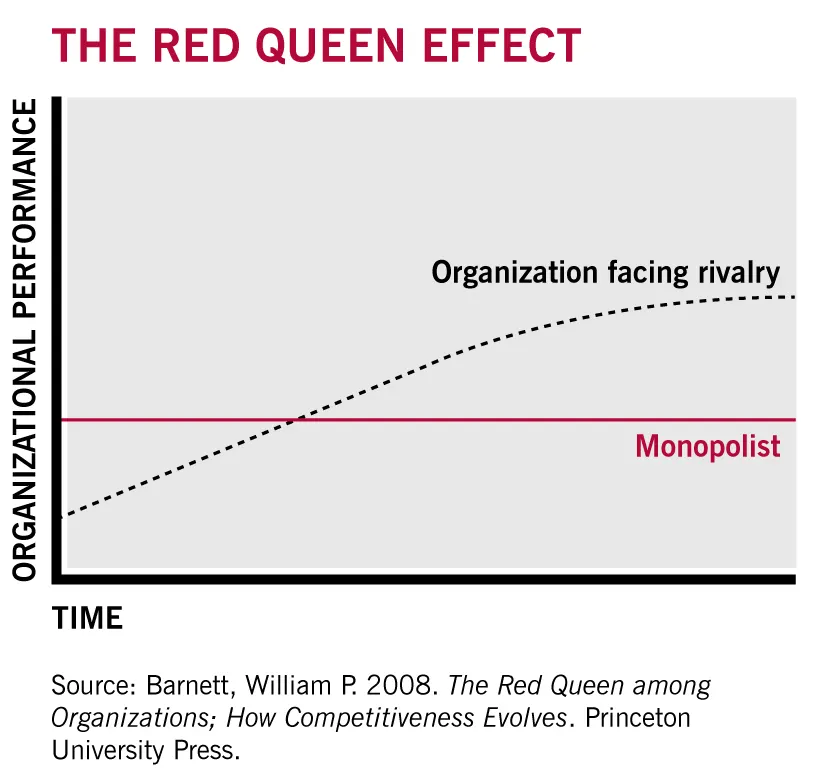
Matt Ridley, the pre-eminent evolutionary scientist addressed the Red Queen hypothesis (popularly known as the Red Queen Effect) in his book “The Red Queen: Sex and the Evolution of Human Nature”. Ridley said that the scientific community recognizes this hypothesis where constant adaptation and improvement is essential for a species to stay in harmony with its constantly evolving environment. Since every species is in a constant state of transformation for survival, it becomes difficult for any one species to gain special benefit over the other in the long run. This sort of healthy competition or fight for survival leads to enhanced fitness rates

Read More

Defining Mind Mapping

Defining Mind Mapping

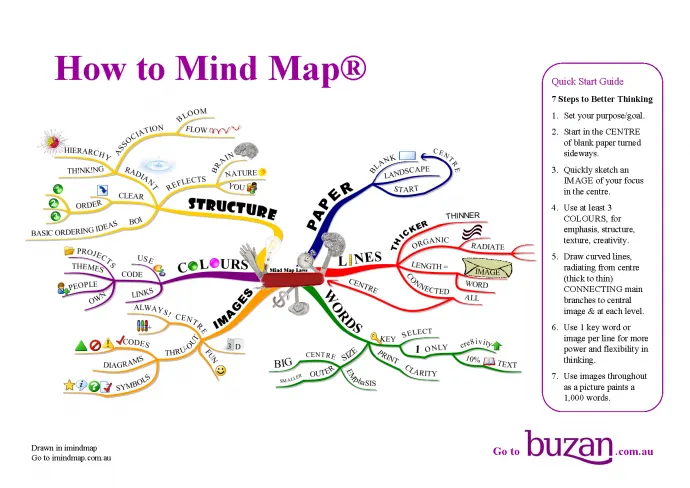
A mind map is a graphical representation of the ideas and concepts in your mind. It is a thinking tool that helps you structure information so that you can recall, comprehend, analyze, synthesize, and generate ideas. In a mind map, information is structured in such a way that it replicates the working of the brain. It allows you to analyze a situation from a wider perspective, than say, traditional note making or a linear step-by-step analytical process. This results in the engagement of your brain in a richer way, improving its cognitive functions. Structure of a Mind Map All mind maps have a common structure. They are organized around

Read More