Understanding Mental Models

Understanding Mental Models

In understanding human behavior, it is useful to focus on how people think and interpret information. Psychological science provides many useful ways to understand human cognition and one of the most popular and scientific approaches is the mental model paradigm. Mental models provide an explanation of how a phenomenon works in the real world and helps individuals classify objects and stimuli into meaningful categories. A mental model is an internal representation of something concrete. A useful definition of mental models is provided by the psychologist, Jay Wright Forrester: The image of the world around us, which we carry in our head, is

Read More
The Need to Avoid a Scarcity Mindset And Develop an Abundance Mindset

The Need to Avoid a Scarcity Mindset And Develop an Abundance Mindset

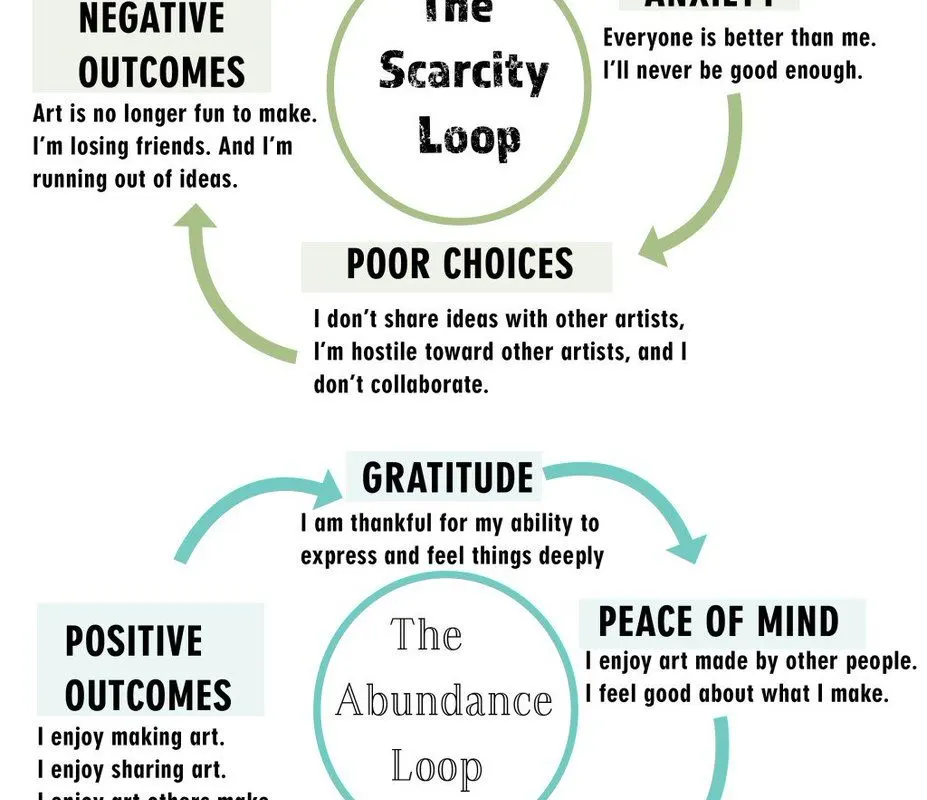
Do you think the world has enough for everyone’s needs or do you think there are not enough resources and everyone has to fight hard to get their share? If it is the former, you have an abundance mindset. If it is the latter, you have a scarcity mindset. The Scarcity Mindset People with a scarcity mindset tend to view life as a zero-sum game, in which one person’s gain is another person’s loss and vice versa. It is often the result of a very narrow mindset, which cannot think beyond the immediate or the short-term. Given below are the typical characteristics of a person with a scarcity mindset.

Read More

Applying Asymmetric Warfare Tactics in Business

Applying Asymmetric Warfare Tactics in Business

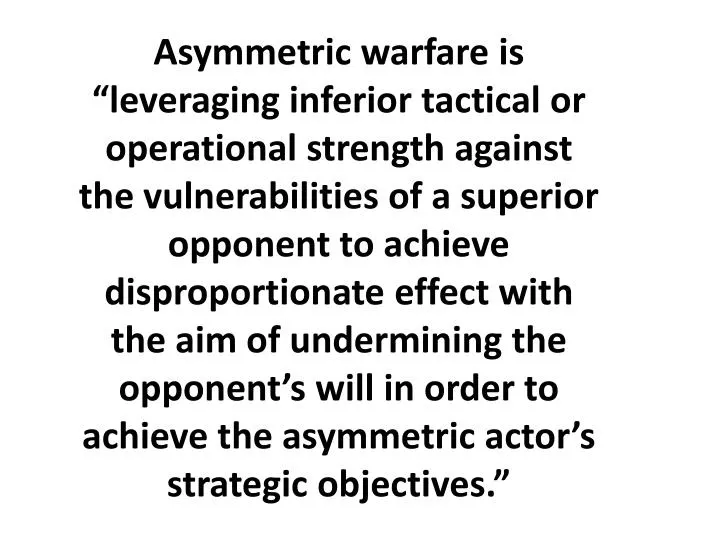
Asymmetric warfare, also known as guerilla warfare, is a war between a professional army and a numerically smaller, lesser-armed movement. While the former mostly sticks to conventional methods of warfare, the latter uses unconventional or asymmetric warfare tactics to gain an advantage over the enemy. Interestingly, the principles of asymmetric warfare are applicable as much in business as they are on the battlefield. Asymmetric Warfare in Business Business and war have more in common than many people think. Your competitors are ruthless, you have to fight hard to gain market share, and fight even harder to retain and increase it. The military principle

Read More

Failure to Account For Base Rate – How It Affects Your Decision Making Process

Failure to Account For Base Rate – How It Affects Your Decision Making Process

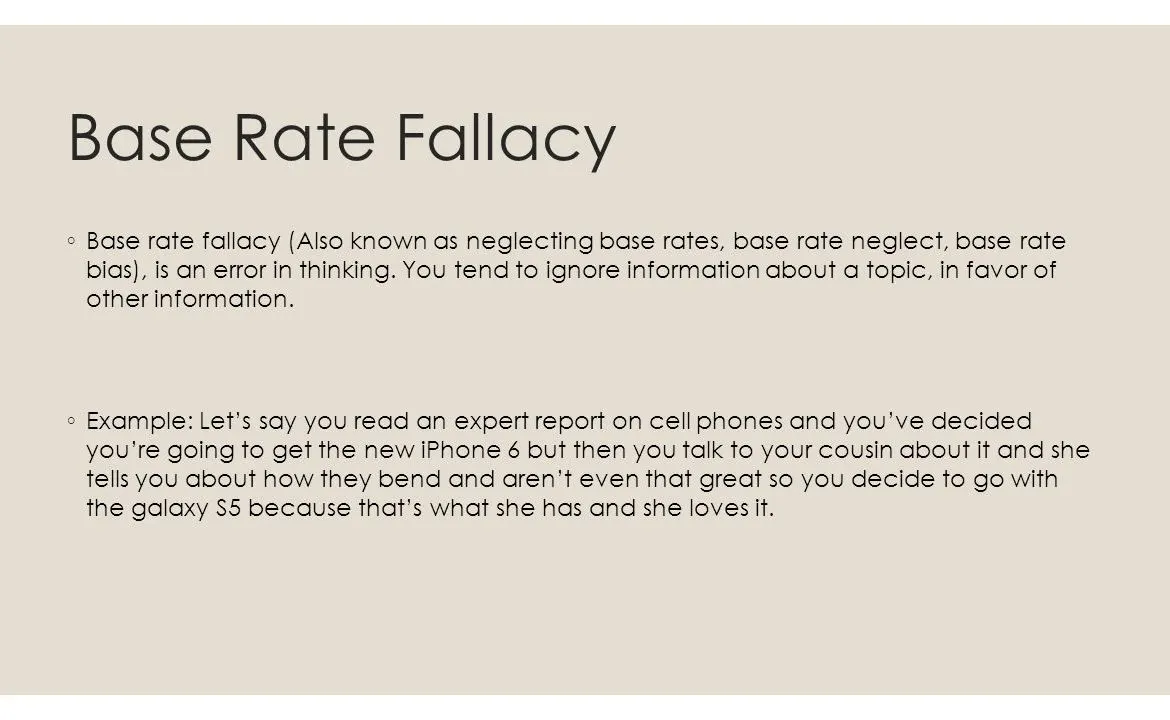
Failure to account for base rate, also referred to as base rate neglect or base rate fallacy, is the habit of jumping to conclusions without factoring in all the relevant, important data. People often try to determine the likelihood of an event without taking into account the ‘base rate’ – the statistical information that can help them make an informed decision. Base Rate Fallacy Explained To be clear, people do not make any decision without considering certain factors or data. The problem, however, is that the data they take into account is not relevant in many cases. As a result, any decision they make is likely to be erroneous. Let us consider a person named X

Read More

Order of Magnitude – What Is It and Why Is It Needed?

Order of Magnitude – What Is It and Why Is It Needed?

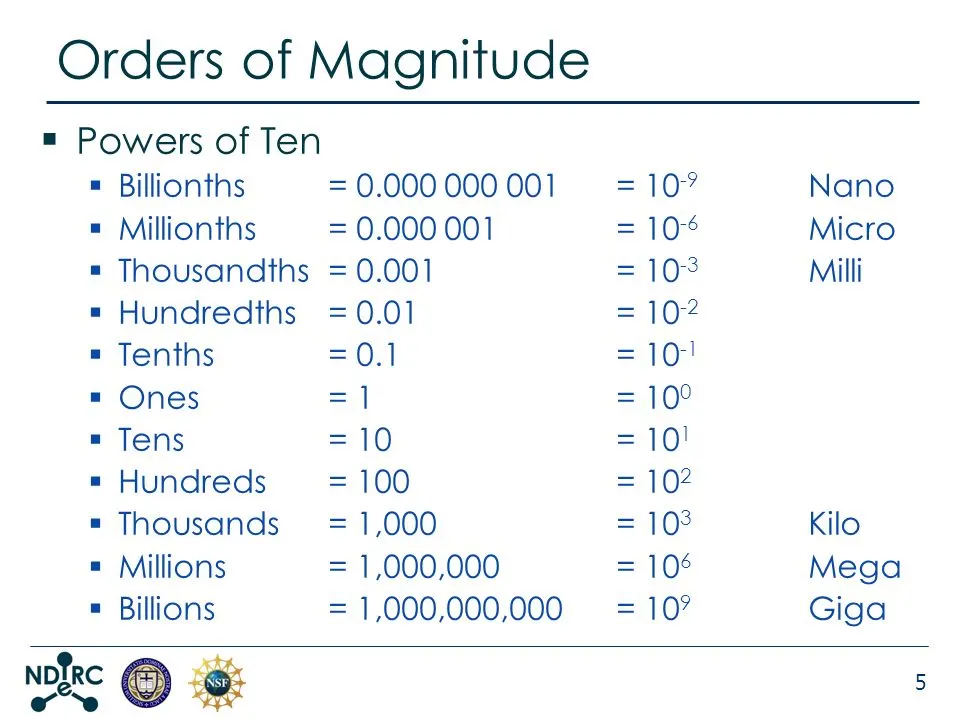
Order of magnitude (OOM) is a method of numerical representation in which numbers are described in terms of powers of ten. For example, 3,474,000, which is the diameter of the moon in meters, can be written as 3.474 x 10⁶. Similarly, 0.00000000000000000000000000166, which is the weight of one atomic mass unit in kilograms, can be written as 1.66 x 10⁻²⁷. Expressing Numbers in OOM The OOM of a number is essentially the number of powers of 10 it contains. For example, the core temperature of the sun is 15,600,000 K. The number can be expressed in terms of OOM as 1.56 x 10⁷. In other words, if the OOM of a number needs to be increased

Read More

The Map is Not The Territory – Explained in Simple Terms

The Map is Not The Territory – Explained in Simple Terms

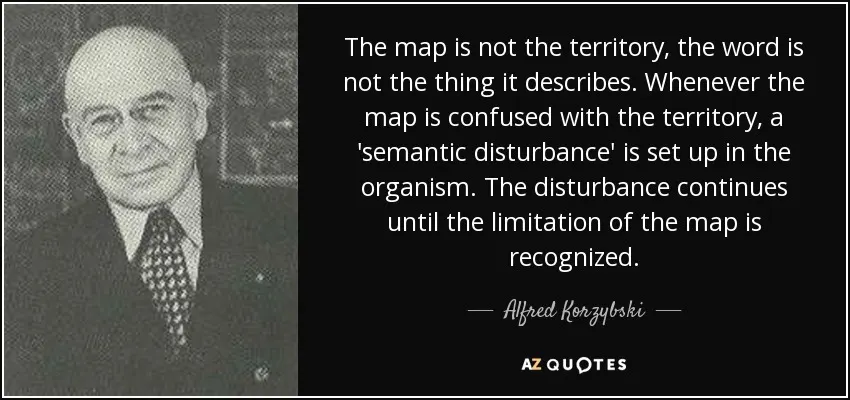
The map is not the territory is a concept developed by noted mathematician Alfred Korzybski. Korzybski developed the concept to explain the fact that belief is different from reality. In other words, our perception of the world could be different from the real world. While it might sound too obvious, a surprisingly large number of people tend to confuse their beliefs with reality. The Concept and What It Means Human beings have the tendency to simplify things and constitute abstractions in an effort to better understand the world that they live in. We create descriptions of the things around us, which are absolutely necessary, but it is also important to remember

Read More

Single and Double Loop Learning – How Organizations React to Problems and Why It Matters

Single and Double Loop Learning – How Organizations React to Problems and Why It Matters

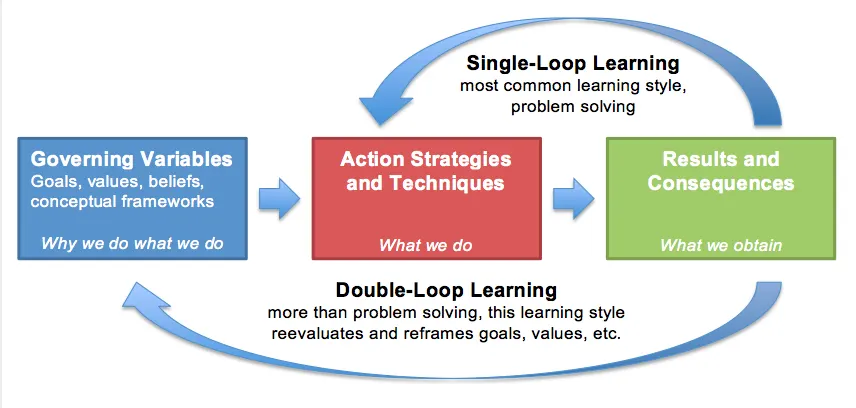
It is said that change is the only constant in life. The principle applies not just to individuals, but large organizations as well. Any large organization ought to be able to unlearn outdated things, learn new things, change its assumptions and projections from time to time based on data, and constantly adapt to an ever-changing environment. This is where the single and double loop learning concepts enter the picture. Single and Double Loop Learning The concept of single and double loop learning was developed by the duo of Chris Argyris, who was a psychologist, and Donald Schon, who was a philosopher. The concept deals with organizational learning

Read More

Long Tail – The Paradigm Shift in the 21st Century Marketplace

Long Tail – The Paradigm Shift in the 21st Century Marketplace

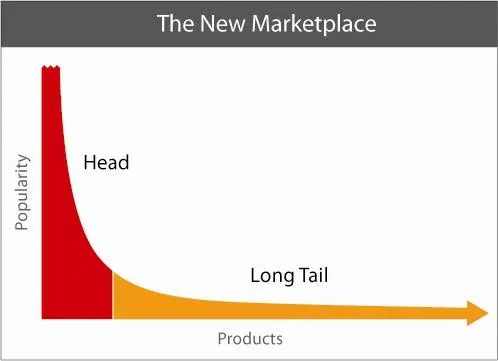
The long tail is a business model which involves offering a large number of niche products that are low in demand and have a low sales volume. This is in stark contrast from traditional business models, which focus more on a small number of best selling products with a large market share. The term was coined and popularized by Chris Anderson, who made an argument for long tail based business models and marketing strategies in his book ‘The Long Tail: Why the Future of Business is Selling More for Less’. In his book, Anderson says that we are witnessing the transition from a marketplace that focuses on best selling products to one that focuses on a million

Read More

Fat Tail Distributions – What Are They and Why Do They Matter?

Fat Tail Distributions – What Are They and Why Do They Matter?

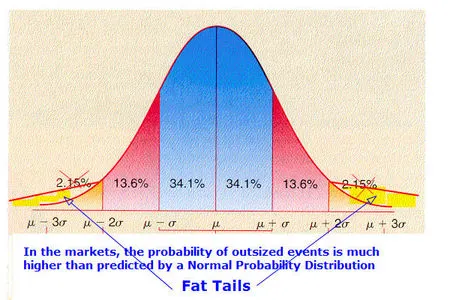
The financial crisis of 2008 (Alan Greenspan knows all about that just like Barney Frank knows about the real estate crisis) was an eye-opener for many people in the industry, as it highlighted the ineffectiveness of conventional financial wisdom when it comes to predicting catastrophic events. It also highlighted the importance and relevance of fat tail distributions in finance. What is a Fat Tail? A fat tail is a statistical distribution that indicates a high probability of rare and extreme outcomes. Under a normal Gaussian distribution, 99% of the outcomes generally fall within three deviations of the mean. Under a fat tail distribution, on the other hand,

Read More

Understanding The Kelly Criterion and Its Applications

Understanding The Kelly Criterion and Its Applications

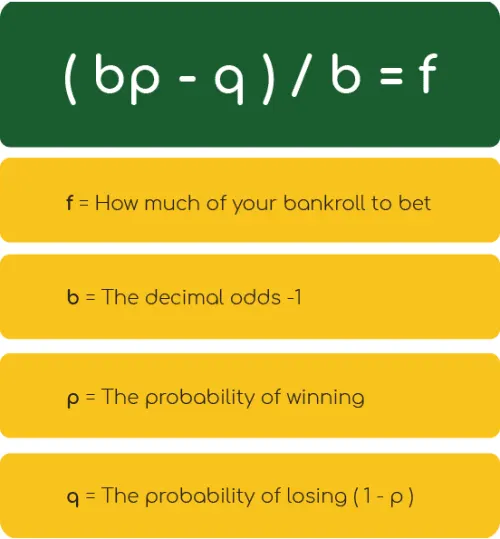
If you are a gambler or an investor, you can increase your chances of winning and maximizing your long-term returns if you follow a proper strategy or formula, rather than relying solely on your impulses. One such strategy is the Kelly Criterion, which is commonly used by many in the punting community as well as financial markets. What Is It? The Kelly Criterion is a formula developed by J.L. Kelly, who was a researcher at Bell Labs (a place you would never see Harry Solomon from Third Rock From The Sun), in 1956. It helps you calculate the amount you should wager or invest in order to minimize your risks and increase the probability of winning and maximizing

Read More