
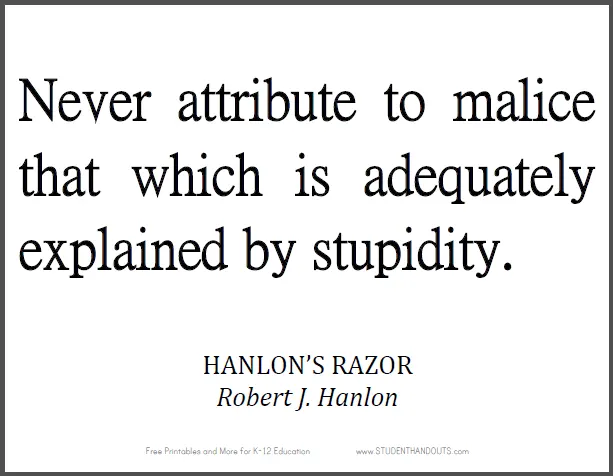
Understanding Mental Models

Understanding Mental Models

In understanding human behavior, it is useful to focus on how people think and interpret information. Psychological science provides many useful ways to understand human cognition and one of the most popular and scientific approaches is the mental model paradigm. Mental models provide an explanation of how a phenomenon works in the real world and helps individuals classify objects and stimuli into meaningful categories. A mental model is an internal representation of something concrete. A useful definition of mental models is provided by the psychologist, Jay Wright Forrester: The image of the world around us, which we carry in our head, is

Read More
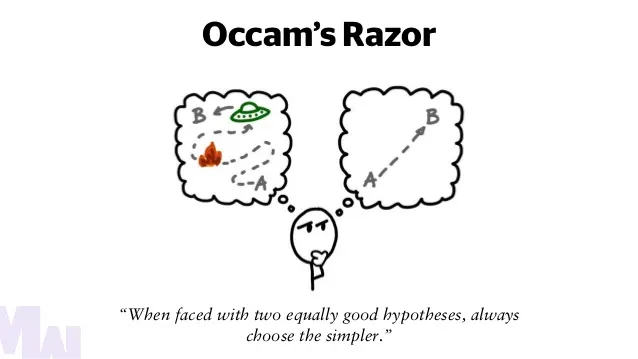
The Principle of Occam’s Razor – Is the Simplest Explanation Always Correct?

The Principle of Occam’s Razor – Is the Simplest Explanation Always Correct?

Occam’s razor, also called the ‘law of parsimony’, is a philosophical idea, mental model, and problem solving principle developed by English theologian William of Ockham in the 14th century. The principle states that if there are multiple hypothetical explanations to a problem, the explanation that makes the fewest assumptions is most likely to be the right one. In other words, if a hypothesis has too many ‘ifs’, it should be discarded in favor of one that offers a relatively straightforward explanation. The principle is aptly called the Occam’s razor because it allows you to shave away unnecessarily complicated theories and choose a working hypothesis

Read More