
In understanding human behavior, it is useful to focus on how people think and interpret information. Psychological science provides many useful ways to understand human cognition and one of the most popular and scientific approaches is the mental model paradigm. Mental models provide an explanation of how a phenomenon works in the real world and helps individuals classify objects and stimuli into meaningful categories. A mental model is an internal representation of something concrete. A useful definition of mental models is provided by the psychologist, Jay Wright Forrester:
The image of the world around us, which we carry in our head, is just a model. Nobody in his head imagines all the world, government or country. He has only selected concepts, and relationships between them, and uses those to represent the real system (Forrester, 1971).
Two useful ways to understand how people think is through the mental models – Occam’s Razor and Hanlon’s Razor. Occam’s Razor is built on the principle that simple explanations for events are more likely to be true than complicated explanations. Occam’s Razor is a key principle for understanding logic and problem-solving. The principle of Occam’s Razor suggests that the best use of time is to provide a simple explanation than trying to disprove complex scenarios. In science, Occam’s Razor is used as a guide in developing theoretical models with the idea that simple experimental hypotheses are more easily testable than complex hypotheses. It is based on the law of parsimony with the idea that the simplest explanation is the best. A practical example of Occam’s Razor is in considering why a student failed a test. One suggestion is that the student didn’t study hard enough and another suggestion is that the professor gave the student a failing grade because of dislike for the student. Given that the first suggestion is more parsimonious, this would be the better reason than the second.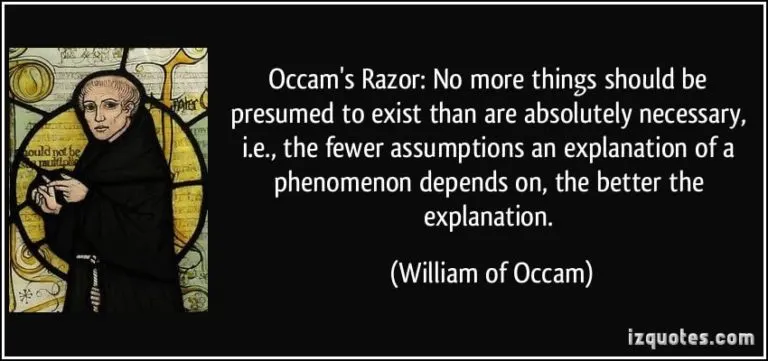
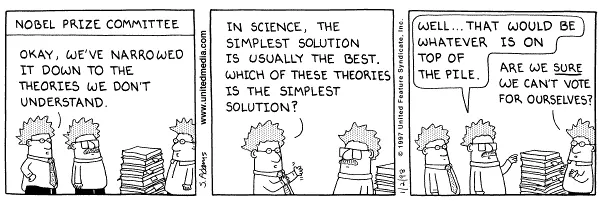
Hanlon’s Razor is similar in principle to Occam’s Razor in that it states that we should not make attributions of malice regarding events but rely on explanations of mistakes rather than ill-intent. Hanlon’s Razor suggests that this is better logic because through use of the model, individuals can avoid paranoia or cling to ideology. If we don’t assume that bad events are always the fault of a malevolent person, we can look for options instead of missing opportunities.
Hanlon’s Razor helps us acknowledge that people make mistakes and that there is a reasonable explanation for events that occurred. Hanlon’s Razor can also be applied to the same scenario on why the student failed the test. The suggestion that the teacher gave a failing grade because of dislike for the student suggests malevolence whereas the more logical explanation is that the student just needs to study harder for the next exam. In this way, Hanlon’s Razor shows how the student’s situation can be improved.
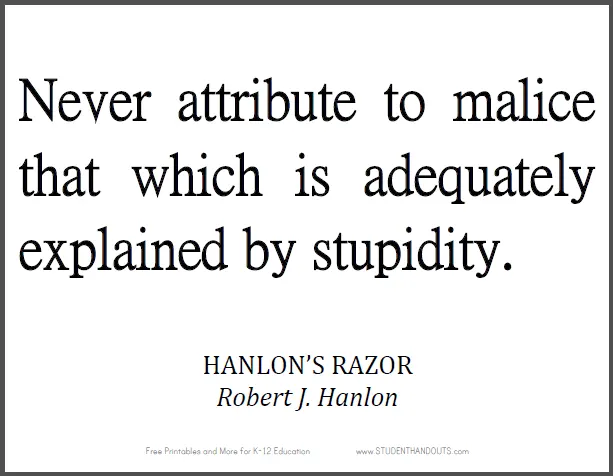
A real-life scenario is currently happening in the United States where the country has been experiencing a partial shut-down since December 2018. This is the longest shut down in American history. Many Americans blame President Trump for the shut-down because he is refusing to pass the budget unless his request for funds for a wall between the USA and Mexico is built to deal with immigration. On January 25th, 2018, President Trump agreed to temporarily end the government shut down without funding for the wall. During the shutdown, many people believed that President Trump’s actions were due to his personality with many people claiming that Donald Trump was a narcissist and that his actions were spiteful. Those who defended President Trump claimed that there was a left-wing conspiracy against the President and that it was the opposition party leaders who were acting out of spite. However, now the negotiations have succeeded and probably the most reasonable and parsimonious explanation for the shutdown was that both parties needed to be more conciliatory in their negotiations. Using Hanlon’s Razor principle, this is also a more benevolent explanation for the shutdown in that it does not suggest that both parties were acting out of evil intentions. The actions were not motivated through malevolence.
Occam’s and Hanlon’s Razor principles help foster a greater understanding in human cognition through demonstrating that the best explanations for human behavior and social events can be best understood through a parsimonious framework. The antecedents of human cognition and behavior are often complex yet the best explanations are typically derived from simple theories. These theories are not necessarily simplistic yet they are straightforward and logical in their explanations. Moreover, Hanlon’s Razor principle reminds us that when someone is driving erratically, the explanation might be that they are late for work rather than that the person is angry. Most explanations should strive to view people as engaging in behavior that helps others while also acknowledging that people sometimes make mistakes.
References
Forrester, J. W. (1971). Counterintuitive behavior of social systems. Technology Review.