Applying Asymmetric Warfare Tactics in Business

Applying Asymmetric Warfare Tactics in Business

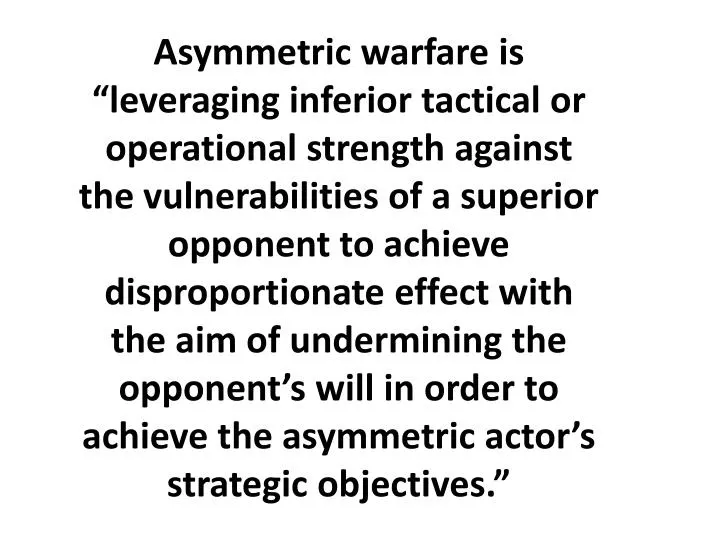
Asymmetric warfare, also known as guerilla warfare, is a war between a professional army and a numerically smaller, lesser-armed movement. While the former mostly sticks to conventional methods of warfare, the latter uses unconventional or asymmetric warfare tactics to gain an advantage over the enemy. Interestingly, the principles of asymmetric warfare are applicable as much in business as they are on the battlefield. Asymmetric Warfare in Business Business and war have more in common than many people think. Your competitors are ruthless, you have to fight hard to gain market share, and fight even harder to retain and increase it. The military principle

Read More
The Map is Not The Territory – Explained in Simple Terms

The Map is Not The Territory – Explained in Simple Terms

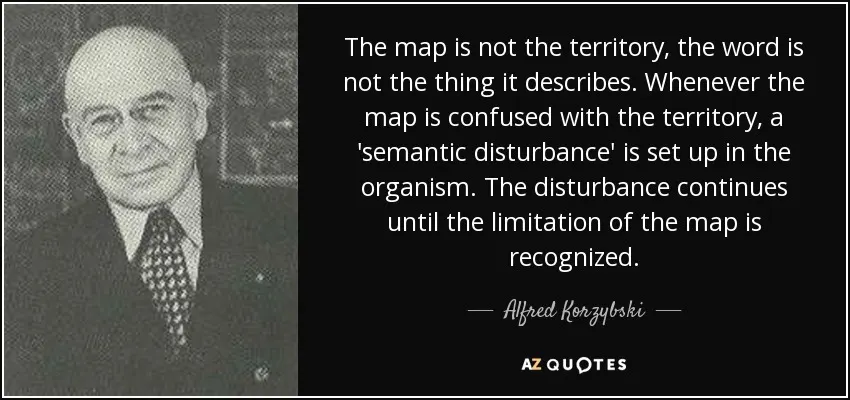
The map is not the territory is a concept developed by noted mathematician Alfred Korzybski. Korzybski developed the concept to explain the fact that belief is different from reality. In other words, our perception of the world could be different from the real world. While it might sound too obvious, a surprisingly large number of people tend to confuse their beliefs with reality. The Concept and What It Means Human beings have the tendency to simplify things and constitute abstractions in an effort to better understand the world that they live in. We create descriptions of the things around us, which are absolutely necessary, but it is also important to remember

Read More

Fat Tail Distributions – What Are They and Why Do They Matter?

Fat Tail Distributions – What Are They and Why Do They Matter?

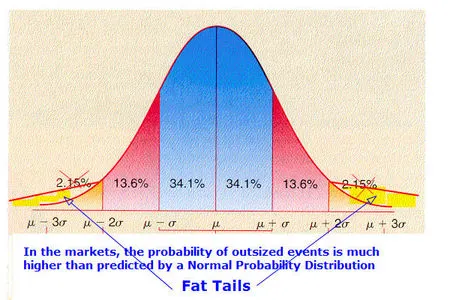
The financial crisis of 2008 (Alan Greenspan knows all about that just like Barney Frank knows about the real estate crisis) was an eye-opener for many people in the industry, as it highlighted the ineffectiveness of conventional financial wisdom when it comes to predicting catastrophic events. It also highlighted the importance and relevance of fat tail distributions in finance. What is a Fat Tail? A fat tail is a statistical distribution that indicates a high probability of rare and extreme outcomes. Under a normal Gaussian distribution, 99% of the outcomes generally fall within three deviations of the mean. Under a fat tail distribution, on the other hand,

Read More

Understanding The Kelly Criterion and Its Applications

Understanding The Kelly Criterion and Its Applications

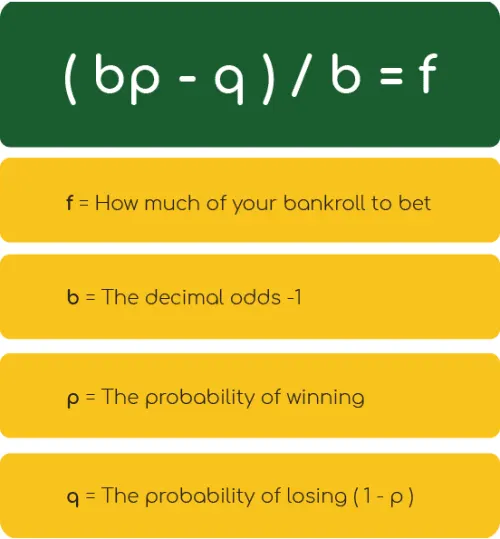
If you are a gambler or an investor, you can increase your chances of winning and maximizing your long-term returns if you follow a proper strategy or formula, rather than relying solely on your impulses. One such strategy is the Kelly Criterion, which is commonly used by many in the punting community as well as financial markets. What Is It? The Kelly Criterion is a formula developed by J.L. Kelly, who was a researcher at Bell Labs (a place you would never see Harry Solomon from Third Rock From The Sun), in 1956. It helps you calculate the amount you should wager or invest in order to minimize your risks and increase the probability of winning and maximizing

Read More

What is Anti-fragility?

What is Anti-fragility?

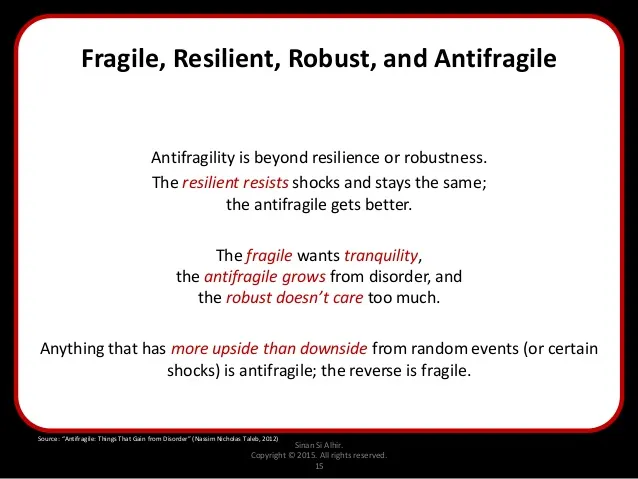
If you think the Black Swan by Nassim Taleb was complex, try interpreting Taleb’s equally important masterpiece, titled ‘Antifragile: Things That Gain From Disorder’. Nassim Nicholas Taleb created a flutter in the intellectual world with his seminal work Black Swan. The book makes you think and question the values and suppositions by which you live your life. However, Taleb’s Antifragile makes you introspect even more. Chances are that your mind will be overwhelmed with a triad of: FRAGILE – ROBUST – ANTIFRAGILE. Each of these represents a concept or a categorization developed by Taleb. None of them hold relevance in classroom curriculums

Read More

Opening the Book on Gresham’s Law

Opening the Book on Gresham’s Law

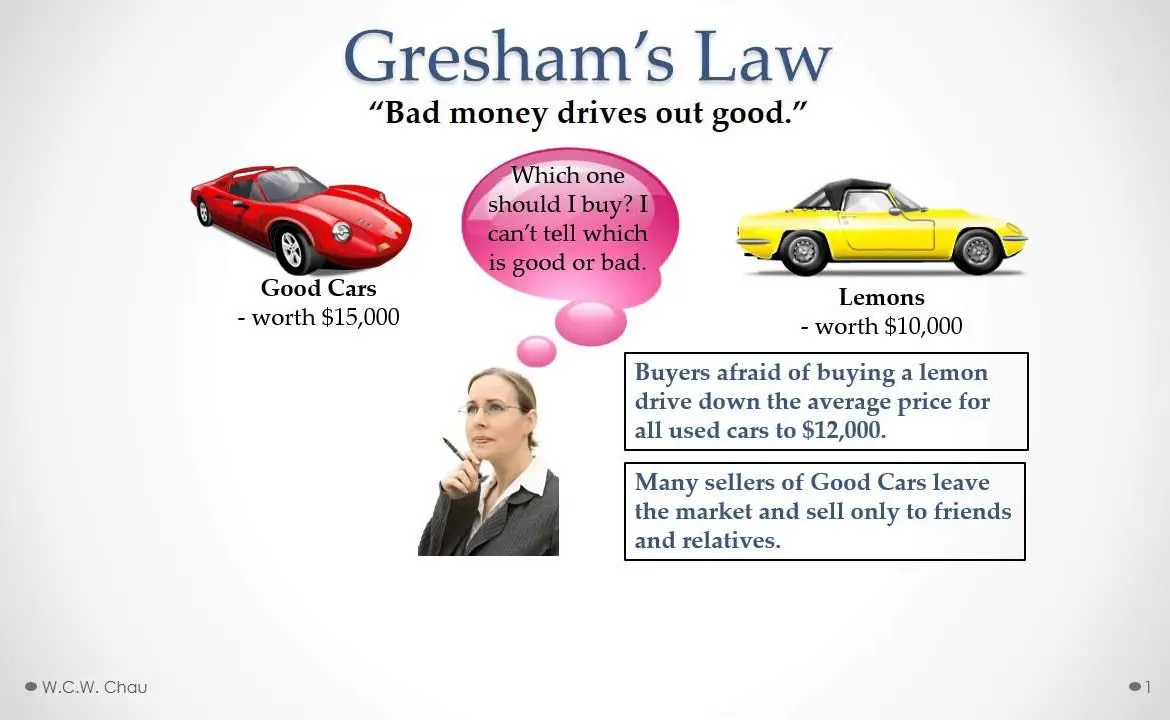
Gresham’s Law is essentially a monetary observation of how people tend to use currency when both, old and new currency is in circulation. To some extent, it is still applicable to modern economic situations. History of Gresham’s Law – a Case of Good and Bad Shillings The easiest way to describe Gresham’s Law is to say that “bad” money tends to drive away “good” money. However, the good and bad in currency can be confusing. This principle originated during a time in history when currency was circulated in the form of coins. Sir Thomas Gresham was one of the more noted financial advisers to Queen Elizabeth I. During his tenure, he

Read More

The Concept of Exaptation and Its Relevance in Modern Life

The Concept of Exaptation and Its Relevance in Modern Life

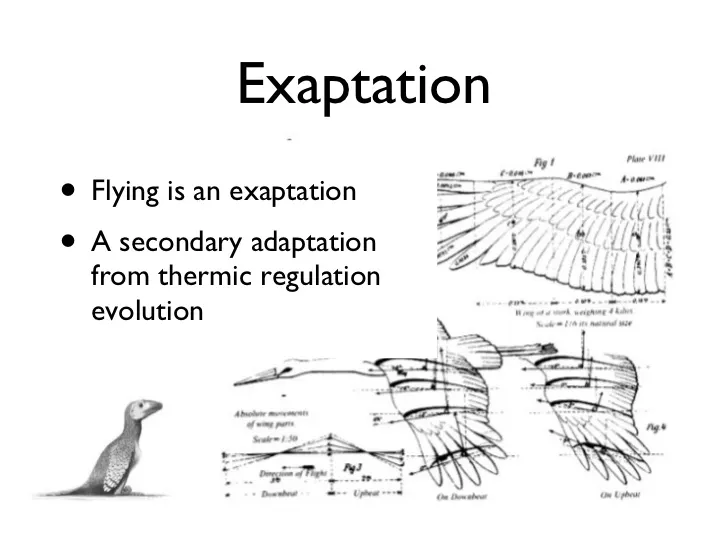
Evolution is all about change. Having started as unicellular organisms, we have now evolved into the most intelligent species on the planet (Harry Solomon in Third Rock From The Sun was an alien – remember that!). The process of evolution itself is highly complex and unpredictable to a certain extent. What starts as a basic trait or feature in an organism could evolve into something entirely different and serve a new purpose. This particular process is referred to as exaptation. What Is It? Exaptation is a concept in evolutionary biology which refers to the process in which an existing trait or feature changes its nature and function to serve

Read More

Fundamental Attribution Error – What Is It and Why You Need to Avoid It?

Fundamental Attribution Error – What Is It and Why You Need to Avoid It?

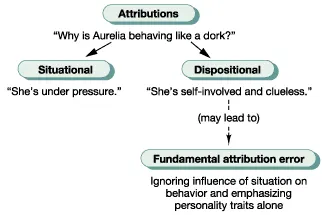
One of the problems that we face at a societal level today is that we are too quick to judge each other (well if someone acts like Dylan did in Transformers 3 it is OK to judge them quickly but let’s get back on track). Any time something goes wrong, our first reaction is to judge the person responsible based on his or her character flaws. Maybe they were too greedy. Maybe they were too stupid. Maybe they were too selfish. Maybe they were too arrogant. We tend to get fixated on what we perceive as a character flaw and neglect all the other factors that could have contributed to the problem in the first place.

Read More

Seize The Middle

Seize The Middle

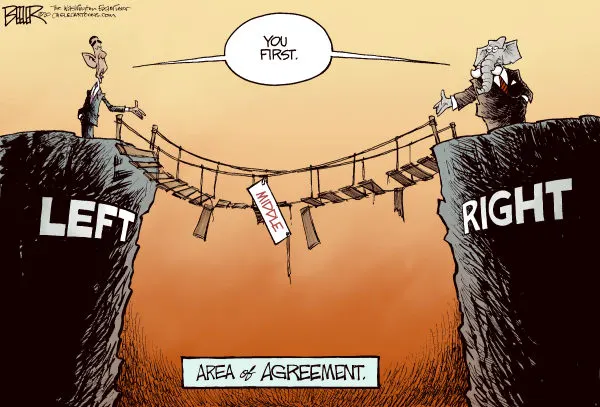
The mental model “Seize the Middle” gained prominence following Emanuel Adler’s distinguished work: “Seizing the Middle Ground: Constructivism in World Politics.” Prior to the emergence of this model, the field of international relations was largely influenced by two dominant approaches: realism and liberalism (or pluralism). But in recent decades, the approach of constructivism in international relations has been increasingly recognized as a more pragmatic approach that aims to “seize the middle ground.” Anarchical System of World Politics The theory of seizing the middle takes issue with liberal and realist assumptions related to

Read More

Prisoner’s Dilemma

Prisoner’s Dilemma

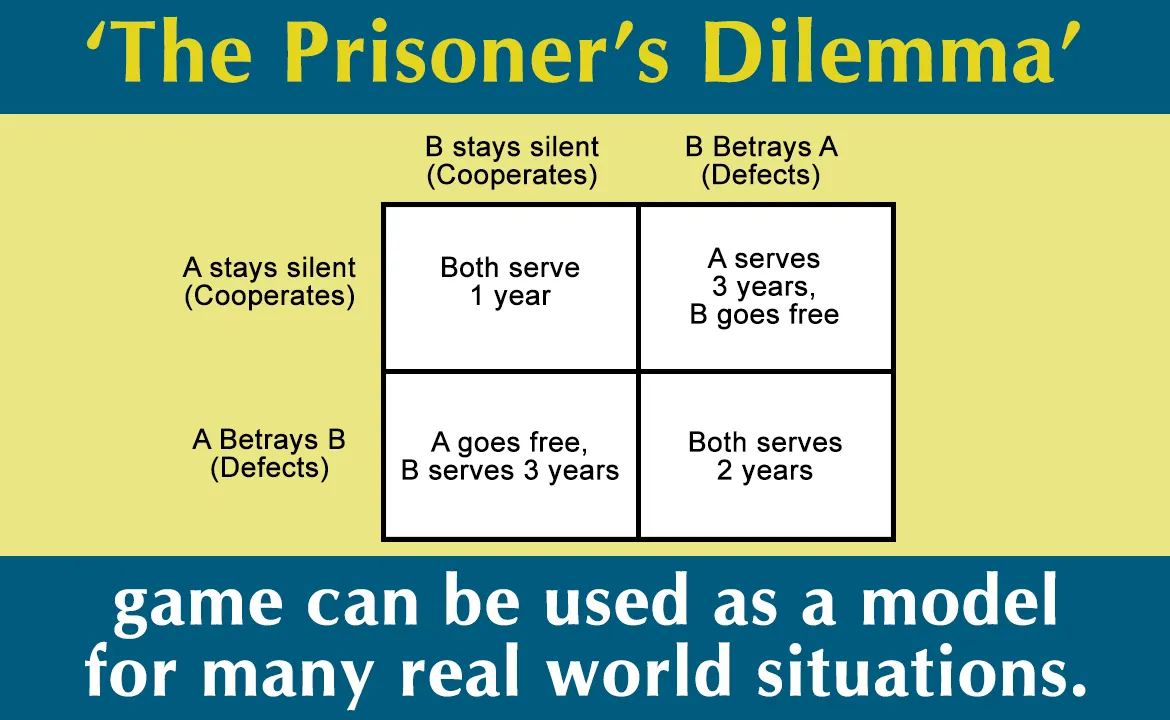
Melvin Dresher and Merrill Flood of the Rand Corporation first introduced the mental model called prisoner’s dilemma in 1950, which has since been recognized as one of the most famous game theories. Prisoner’s dilemma essentially provides a framework to understand how to achieve a balance between two seemingly opposing forces – competition and cooperation. The concept is now used as an effective tool for making strategic decisions in the field of politics, economics, sociology, business, and finance. How does it Work? Prisoner’s dilemma game theory is about two criminal gang members (which are widespread in Chicago, LA, Baltimore, and so on)

Read More