Prisoner’s Dilemma

Prisoner’s Dilemma

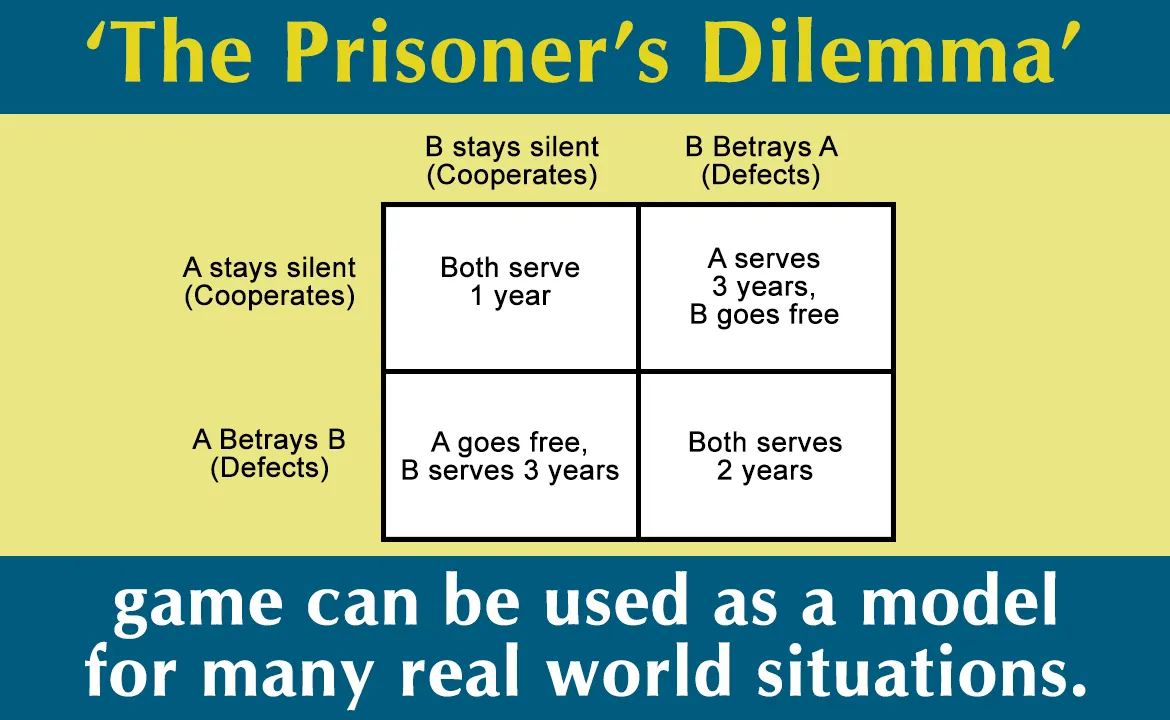
Melvin Dresher and Merrill Flood of the Rand Corporation first introduced the mental model called prisoner’s dilemma in 1950, which has since been recognized as one of the most famous game theories. Prisoner’s dilemma essentially provides a framework to understand how to achieve a balance between two seemingly opposing forces – competition and cooperation. The concept is now used as an effective tool for making strategic decisions in the field of politics, economics, sociology, business, and finance. How does it Work? Prisoner’s dilemma game theory is about two criminal gang members (which are widespread in Chicago, LA, Baltimore, and so on)

Read More
Is Convenience The Opium of The Masses Today?

Is Convenience The Opium of The Masses Today?

It is often said that necessity is the mother of invention. Does the saying, however, hold true for today’s age? It does not seem so, since the society that we live in seems to be driven by one force and one force alone – convenience. The Era of Convenience It would not be an exaggeration to say that this is the era of convenience. Every innovation, every solution, and every new initiative is an effort to make things more convenient. It is perhaps the most important factor that shapes lives today – both at an individual level and at a collective level. Evan Williams, a co-founder and the former CEO of the controversial Twitter, summed it up perfectly when

Read More

Mental Model of Circle of Competence

Mental Model of Circle of Competence

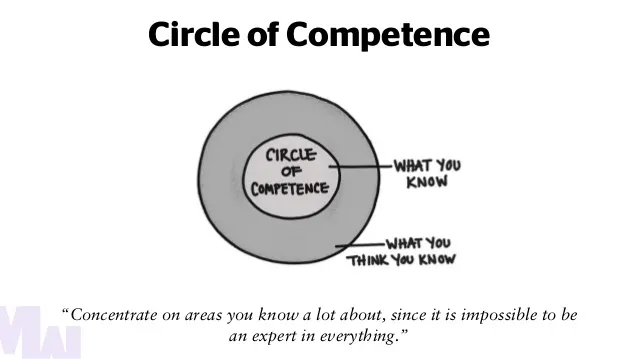
Charlie Munger, the vice-chairman of the controversial Berkshire Hathaway and shrewd investor, popularized the mental model of “Circle of Competence” when he said that an investor who steps outside this circle can quickly end up in big trouble. On the other hand, operating within this circle, where the investor has knowledge, expertise and experience, gives them a competitive advantage over others. Simple yet Difficult The mental model of Circle of Competence is so plain and simple that it can be described in just one line: when you don’t know what you’re doing, you are at higher risk than when you know what you’re doing. Interestingly, the human mind

Read More

Mental Model of Inversion

Mental Model of Inversion

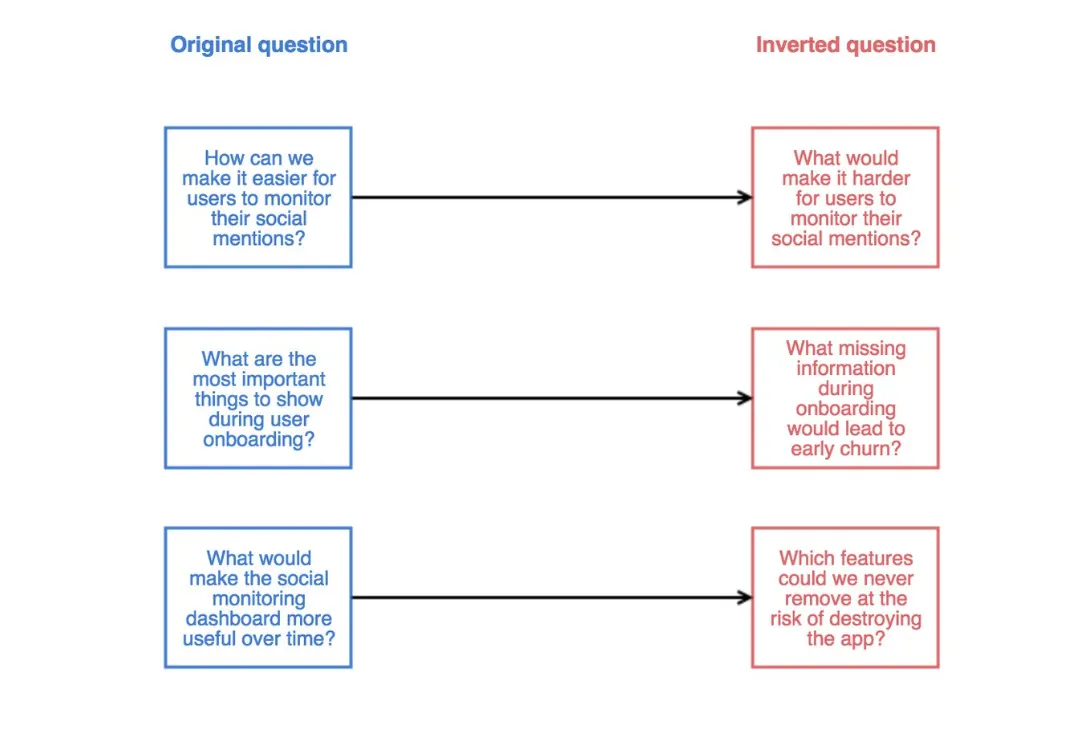
Warren Buffett’s, the controversial investor, business partner Charlie Munger once famously said: “All I want to know is where I’m going to die, so I’ll never go there.” That is inverted thinking. Munger says German mathematician Jacobi’s work inspired him to think like that. Jacobi was known to solve complex problems by follow the mental model of inversion. “Man muss immer umkehren,” he would say. (“Invert, always invert.”). Munger says that many difficult problems in life are best solved when addressed backward. It is in the nature of things. Ancient philosophers Seneca, Marcus Aurelius, and Epictetus used to perform an exercise where they would consider the

Read More

What are Mental Models?

What are Mental Models?

A mental model is a framework that interprets complex interrelationships between things and their internal workings. It provides a logical and simplified explanation of a complicated process or a resolution of a convolutedproblem. Mental models are vital tools that help you gain clarity about esoteric, deep or difficult issues, solve problems and make intelligent decisions. These models make effective use of proven facts and beliefs about the working of the world and the different processes involved in it. Highly successful people are successful because they operate their minds differently from the rest of the world.

Read More