The Beginner’s Guide to Heuristics Based Problem Solving

The Beginner’s Guide to Heuristics Based Problem Solving

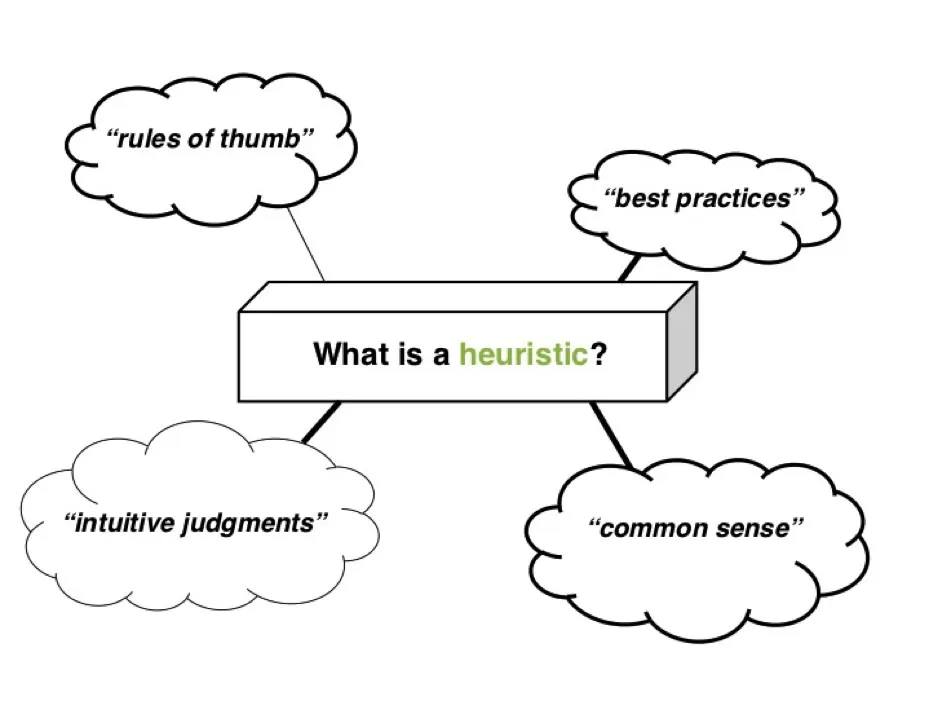
Heuristics are mental shortcuts that enable you to make decisions and solve problems quickly. The term is Greek in origin, meaning ‘to find’ or ‘to discover’. Though the term sounds very exotic, it is a technique we all use in our everyday life, without even realizing it.   How Does it Work? Daniel Kahneman said in Thinking, Fast and Slow: “This is the essence of intuitive heuristics: when faced with a difficult question, we often answer an easier one instead, usually without noticing the substitution.” One of the most common heuristics that we all know of and use is the ‘lefty-loosey, righty-tighty’ rule. When you are trying to screw something in, you generally turn it

Read More

Systems Thinking And its Role in Problem Solving

Systems Thinking And its Role in Problem Solving

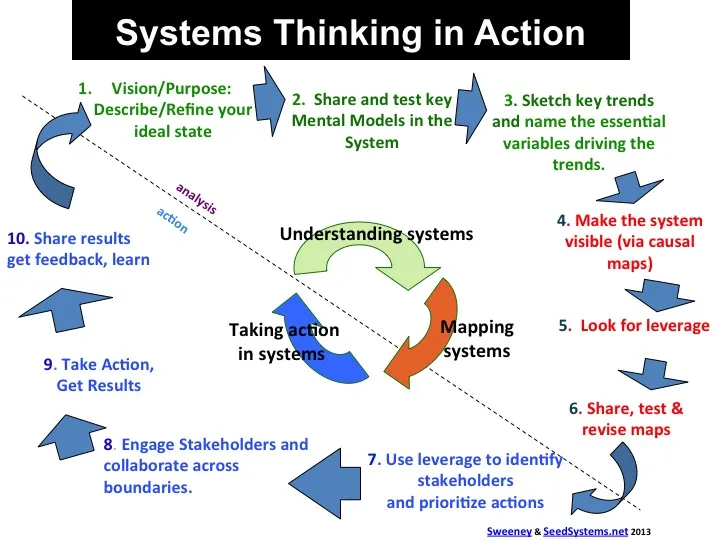
Systems theory, also referred to as systems thinking, is the study of dynamic systems, which comprise a number of small subsystems that are interconnected and interdependent on each other. Rather than focusing on individual parts, the theory focuses on the links and interactions between the individual parts and their role in making the system function properly. The underlying concept of systems theory is the belief that knowledge can only be derived from understanding the whole rather than the individual parts, which was first stated by Aristotle. It stresses the need for shifting the attention from the part to the whole. Peter Senge said in The Fifth Discipline

Read More

The Beginner’s Guide to The Sunk Cost Fallacy

The Beginner’s Guide to The Sunk Cost Fallacy

Consider the following scenario. You join a debate club to sharpen your debating and public speaking skills. You pay $200 for eight classes. You attend two classes and realize that you simply do not enjoyit. May be the instructor is too strict, your co-debaters are not fun to talk to, you are not learning as much as you thought you would, or you simply do not like the atmosphere for some other reason. However, you still feel compelled to go to the class, because you have already paid for it. After all, why waste your hard-earned money, right? Turns out, it is not the right decision. The only reason why you made the decision in the first place is that […]

Read More

Expected Value – A Mathematical Concept to Improve Your Decision Making Skills

Expected Value – A Mathematical Concept to Improve Your Decision Making Skills

Your success in life is determined by the decisions you make at various points. Make theright decision and you could move forward. Make the wrong decision and you could get stuck where you are or worse still, go backward. Unfortunately, many people have an instinctual approach towards decision making, rather than a logical approach. They tend to avoid risks at all costs and always try to opt for the ‘safe’ choice, even if it is not very profitable or effective in the long run. The truth is that in many cases, what you perceive as a ‘risky’ choice might not be nearly as risky or dangerous as you think. Now, the question is – how do you figure it out? This […]

Read More

What are Mental Models?

What are Mental Models?

A mental model is a framework that interprets complex interrelationships between things and their internal workings. It provides a logical and simplified explanation of a complicated process or a resolution of a convolutedproblem. Mental models are vital tools that help you gain clarity about esoteric, deep or difficult issues, solve problems and make intelligent decisions. These models make effective use of proven facts and beliefs about the working of the world and the different processes involved in it. Highly successful people are successful because they operate their minds differently from the rest of the world.

Read More

How to make the right decisions

How to make the right decisions

Should I take this job? Should I move? These are questions that we all face and sometimes it is hard to make decisions. Decision styles reflect the typical manner by which individuals make decisions. Research showsthat people have different kinds of styles. Decision-making is a problem-solving activity whereby we try to find a solution that is satisfactory.  The decisions that we make can be based on what we know, referred to as tacit or explicit knowledge, and our beliefs. As humans, we strive to make the right decisions particularly for things that matter. Unforunately, according to Brian Tracy, author of  Get Smart!: How to Think and Act Like the Most Successful and Highest-Paid People in Every Field, many

Read More