
A mind map is a graphical representation of the ideas and concepts in your mind. It is a thinking tool that helps you structure information so that you can recall, comprehend, analyze, synthesize, and generate ideas. In a mind map, information is structured in such a way that it replicates the working of the brain.
It allows you to analyze a situation from a wider perspective, than say, traditional note making or a linear step-by-step analytical process. This results in the engagement of your brain in a richer way, improving its cognitive functions.
Structure of a Mind Map
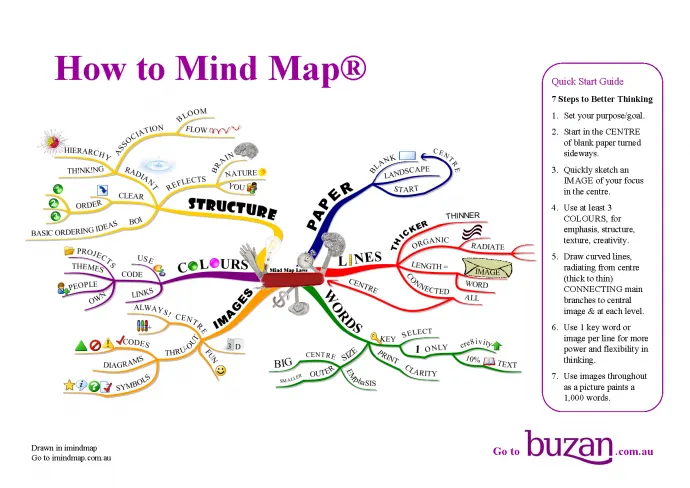
All mind maps have a common structure. They are organized around a central concept which then branches off into various associations and ideas. A single keyword is used for each idea rather than a descriptive paragraph. A single keyword per association provides more clarity, creativity, and freedom.
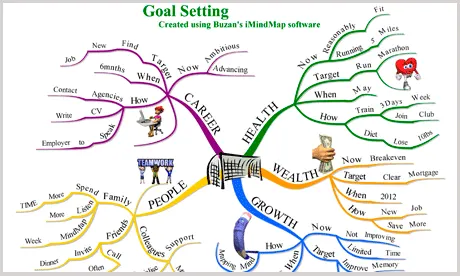
Colors and images are used while creating a mind map as research has shown that they aid the mind in remembering things. The mind map turns a monotonous list of information into a highly organized, memorable, and colorful diagram that imitates the working of your brain.
A mind map can be understood by imagining it as a map of a city. The city center is the main idea of the mind map, the main roads connected to the center represent the other key ideas in your thinking process, and the secondary roads are the secondary thoughts of your mind. The special shapes or images represent landmarks in the map of the city.
How to Make a Mind Map
The process of drawing a mind map:
- Start from the center of a blank page by writing down or drawing the central concept that you are going to work on. Place the page in a horizontal position.
- Develop related subtopics by connecting them to the central idea with thick colored branches.
- Repeat the process for all subtopics, generating more levels of subtopics while connecting them with the corresponding subtopics.
Benefits of Mind Maps
Mind maps are more effective than other linear note-making and brainstorming methods for the following reasons:
- It’s a graphical map that includes images, numbers, words, and colors, so it is more enjoyable to create and easier to remember. The combination of pictures and words make it six times better for retaining information than only words.
- Mind maps work through the use of natural associations. This helps in generating more ideas while adding depth to your subject. It also prompts you to search for new ideas to fill the map.
- A mind map is perfect for giving someone an overview of a complicated subject while still retaining most of the relevant information.
- It is an intuitive way to organize your ideas since mind maps imitate the functioning of the brain.
Fritjof Capra summed up mind mapping with these words in his book “The Web of Life: A New Scientific Understanding of Living Systems” – patterns cannot be weighed or measured. Patterns must be mapped.