
The term lateral thinking was coined by Edward de Bono in his work “The Use of Lateral Thinking” published in 1967. Edward de Bono has taught at the universities of Harvard, Cambridge, and Oxford. He is regarded as a highly influential thinker and an authority in the teaching of thinking as a skill.
According to de Bono, a healthy human brain does not want to always be creative, it is designed to figure out how to do things or how to think about things and then ‘locks’ that automatic response or behavior into a subconscious process so that your conscious brain can focus on other matters.
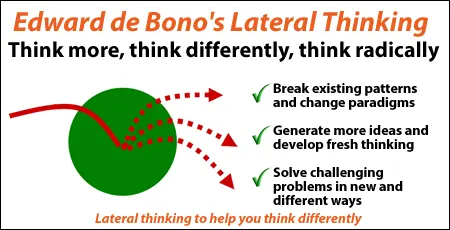
Lateral Thinking
Lateral thinking is a process in which problems are approached indirectly and creatively instead of traditionally through step-by-step logic. Established patterns are rejected and unconventional reasoning is used to solve a problem. Lateral thinking encourages people to look at a situation from a unique perspective and come up with original solutions.
It has proved to be very useful in careers which require high levels of creativity like designing, marketing, media, and advertising.
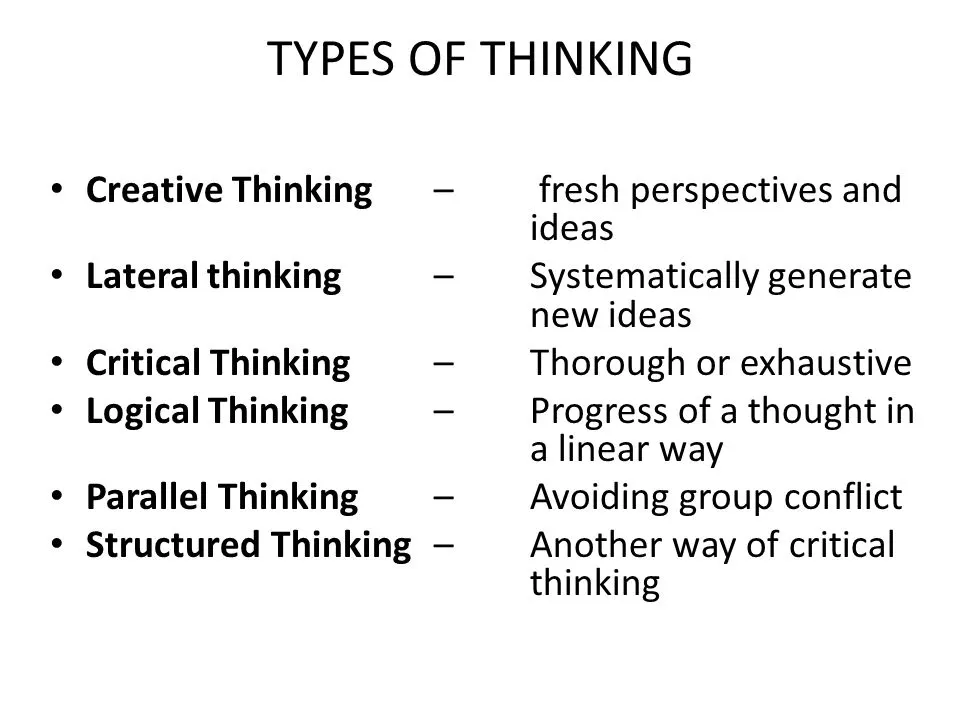
Techniques of Lateral Thinking
Lateral thinking techniques are supposed to provide a deliberate and systematic process that will result in innovative thinking. These techniques will help you find creative solutions that you would not have been able to think of otherwise. Below are some of the techniques to help generate creative ideas to solve problems:
Alternatives
Instead of going for the most obvious solution, this technique encourages you to come up with a wide range of possible solutions. The different ideas can then be developed to establish new approaches.
Challenge
This technique asks you to challenge yourself by breaking away from the traditional way of doing things. Once you break free from the limits of traditional approaches, you will be able to come up with innovative methods to solve your problems.
Harvesting
This technique involves selecting valuable and practical ideas so that they can be turned into practical solutions. Harvesting helps identify ideas that may become valuable in the near future.
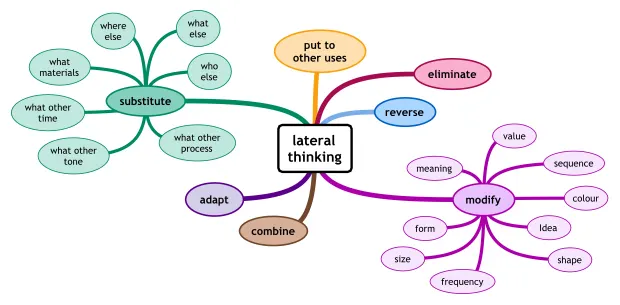
Creative Thinking Techniques
Creative people often hit roadblocks in their writing while searching for new content. Coming up with creative ideas every day can get taxing. Here are some creative problem-solving techniques:
Mind Mapping
Note down every idea that comes to your mind while thinking about the problem. This helps in generating good ideas that you can develop later.
Checklist
Train yourself to think like a child. Children have a powerful imagination and their curiosity is boundless. Create a checklist of questions in your mind along the lines of “Why?”, “Where?” and “When?”
Random Word Generator
Pick some random words and create your content around those words in an imaginative way. This will help you come up with highly creative content.
Lateral thinking constitutes the foundation of invention and innovation. It allows researchers, creators and innovators to be more confident and proactive in their thinking. When it comes to solving problems that have not yet been solved, lateral thinking enables an individual to choose their starting point.